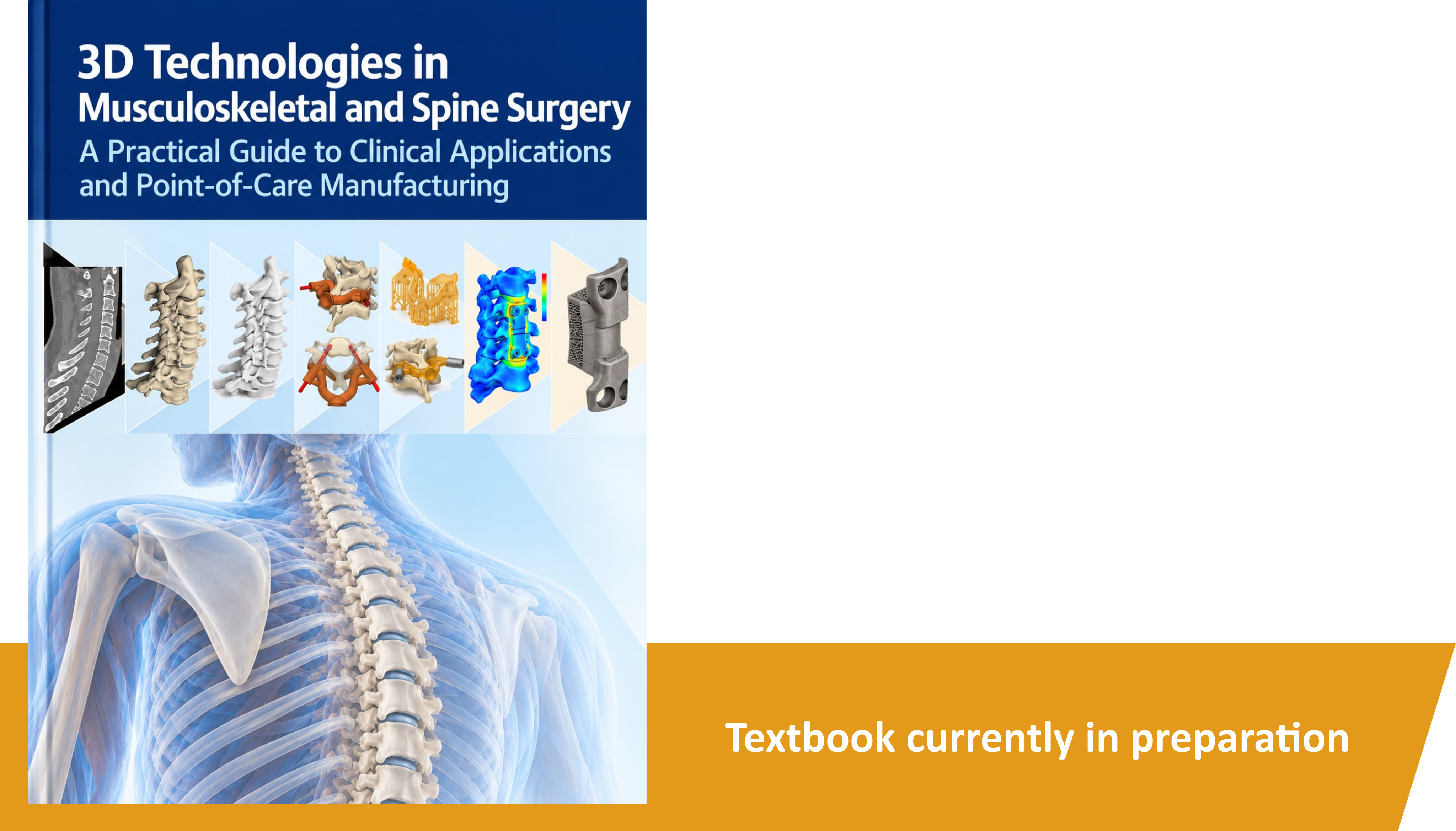
THE 3D LABORATORY EDUCATION PROGRAM
A new education program will soon bring clinical 3D modelling and printing into the curriculum for medical students and practising surgeons, as well as the engineers and designers they work with. It teaches the entire process from a patient’s scan to a simulated, printed, and surgically usable model in a hybrid, credit-bearing university course.
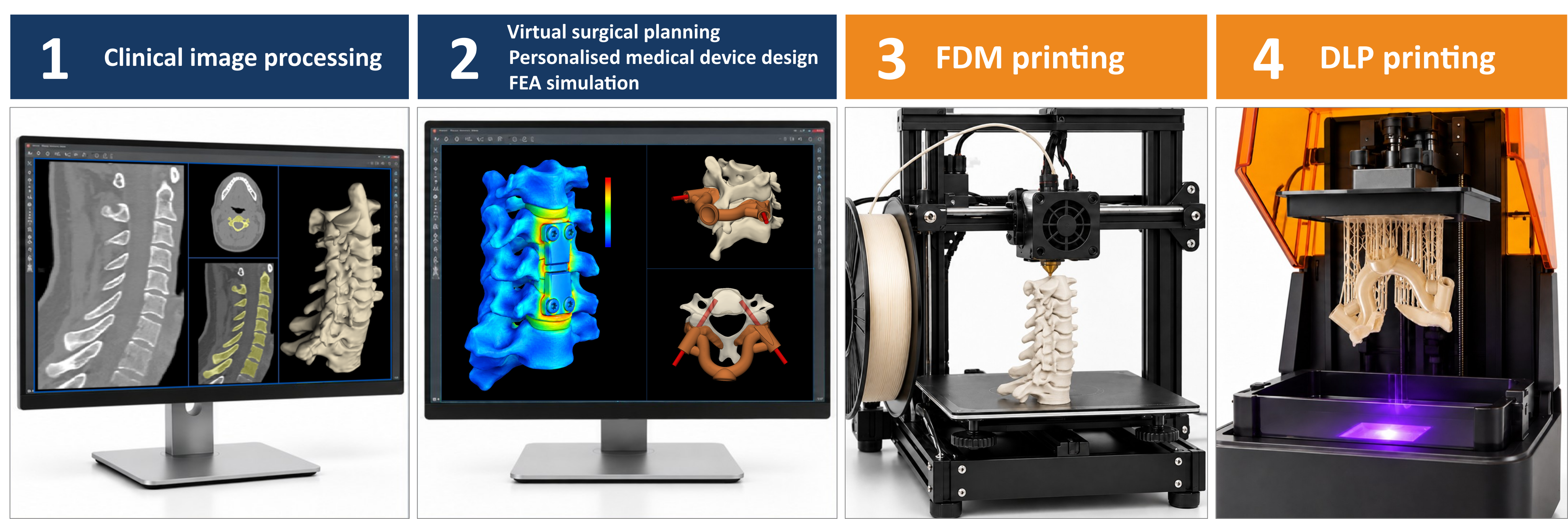
Medical curricula teach diagnostic imaging in theory, but rarely reach the 3D reconstruction of patient anatomy or the design of patient-specific navigational templates and implants. The program closes this gap. It combines undergraduate medical courses with continuing medical education in a hybrid structure. With the help of a printed textbook, participants learn anatomical reconstruction, preoperative surgical simulation and biomechanical analysis side by side. The course brings together clinicians, engineers and designers. Through dual accreditation, students earn university credit points and practising specialists earn OFTEX/CME points.
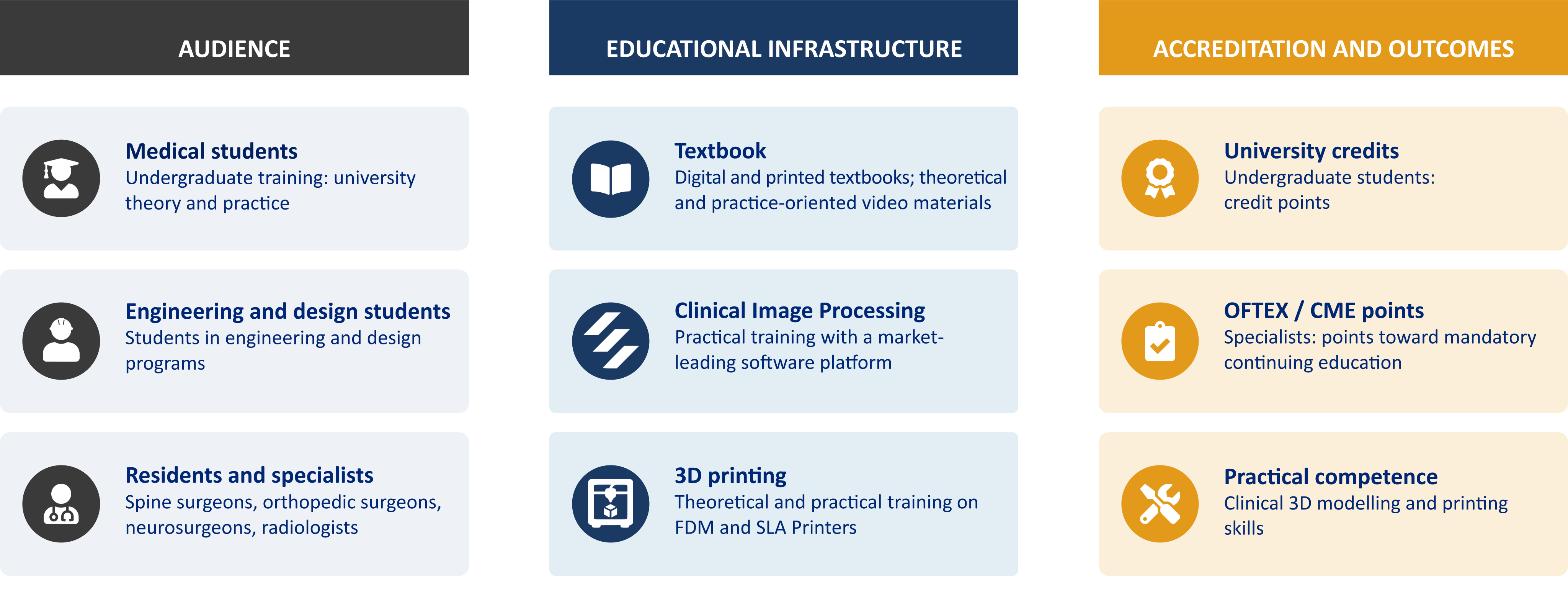
The curriculum rests on industry-standard Materialise software. The program works with student licences and a closed, instructor-curated DICOM dataset, and progresses step by step from segmentation to finite element simulation of spine and hip models. Digital models then pass directly to printing: bone models will be produced with FDM technology, and surgical guides that require high precision with SLA technology. The teaching material will be published open access in both print and e-book formats. This will help spread knowledge of medical 3D modelling and additive manufacturing across the country and keep Hungarian medical education at the technological forefront.