3D ARTHRO SEPT
The aim of 3D ARTHRO SEPT is to develop a digital workflow for producing patient-specific, antibiotic-loaded articulating spacers for the treatment of periprosthetic joint infection. Based on the patient’s CT scan, we design and 3D-print sterilisable moulds, into which antibiotic-loaded bone cement is cast during surgery. The resulting spacer matches the patient’s anatomy, preserves joint mobility between the two surgeries, and locally delivers the antibiotic selected through microbiological testing.
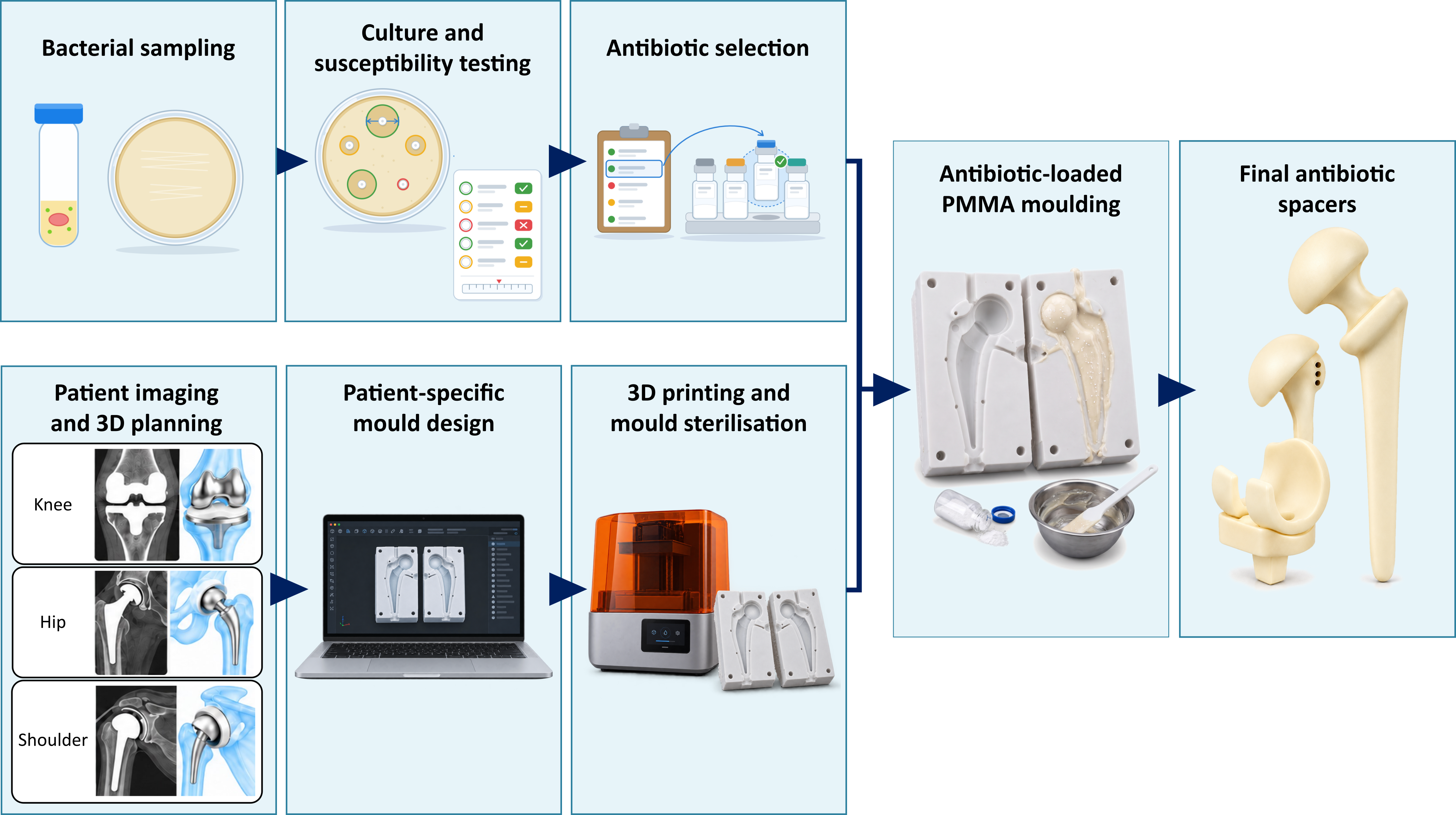
Periprosthetic joint infection is one of the most serious complications of joint replacement. The standard treatment is two-stage revision arthroplasty: the infected implant is removed and replaced with an antibiotic-loaded bone cement (PMMA) spacer until reimplantation. Static spacers often cause stiffness and bone loss, whereas articulating spacers preserve mobility.
3D ARTHRO SEPT combines two workflows. The pathogen is identified through culture and antibiotic susceptibility testing, and the most effective antibiotic is selected. In parallel, according to the workflow under development, a patient-specific mould is designed from CT data, 3D-printed and sterilised. The antibiotic-loaded cement will be cast into the mould during surgery, producing a spacer that can precisely match the anatomy and may facilitate reimplantation.